NOTES
Introduction
This week’s portion begins with the words, “Ya’akov continued living in the land where his father had lived as a foreigner, the land of Kena’an.” (Gen. 37:1). This Parsha begins the story of Yosef, yet we start with Jacob, Ya’akov. This serves as a reminder that each story is connected. The story of the exodus begins with the words, “Now there arose a new king over Egypt. He knew nothing about Yosef.. “(Exodus 1:8).
Connection
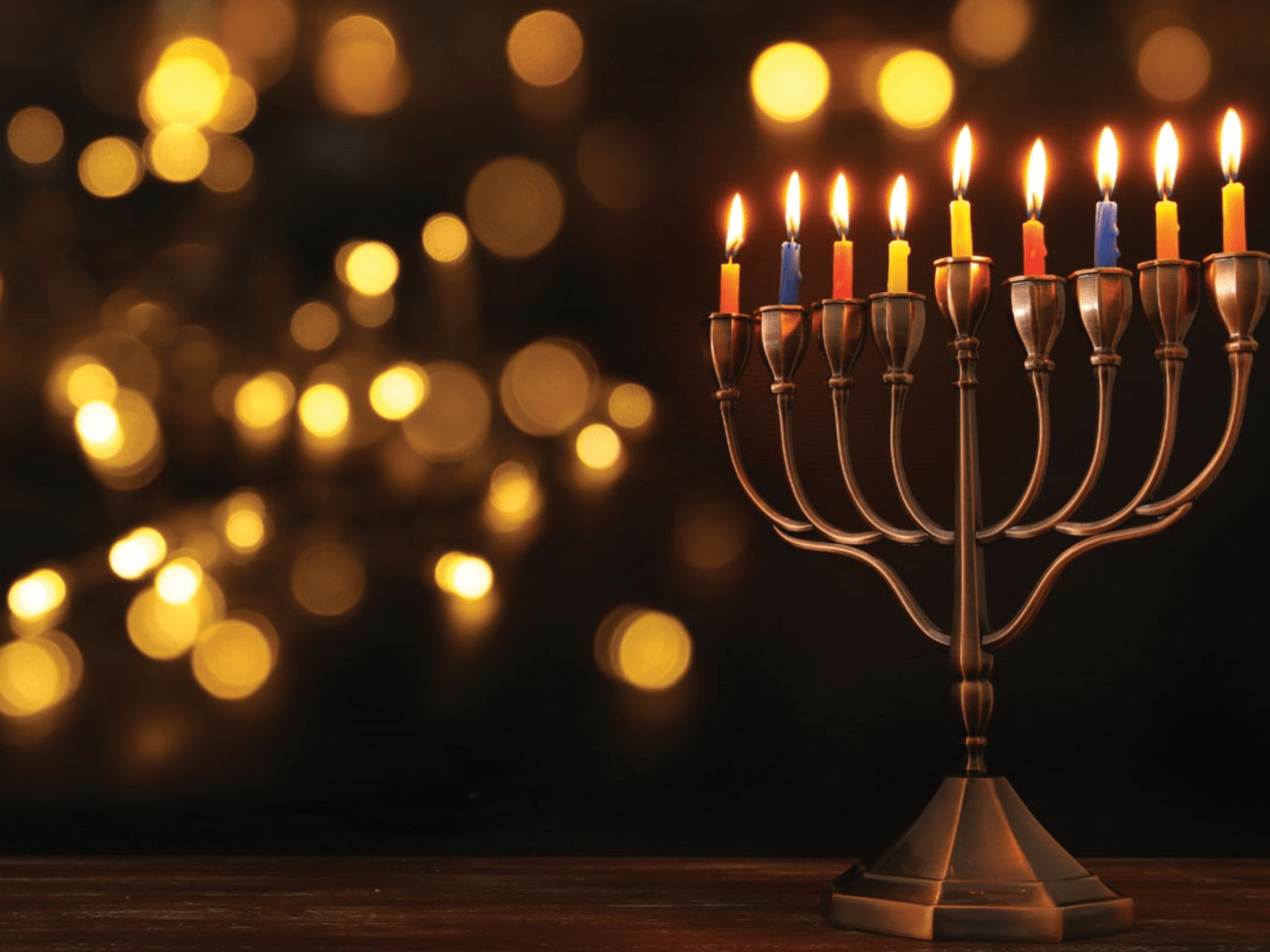
Chanukah is the season of miracles. It does not just remember the miracle of the oil, the rededication of the Temple, and the commitment of the Maccabees; it is a reminder to live in the spirit of refusing to join a pagan culture.
Yosef (Joseph)
Yosef was the favored son of his father, evidenced by the special coat he was given, which caused jealousy among his brothers. That jealousy turned to anger when he shared God-given dreams that should have been kept to himself. Because the brothers did not put their anger in check, they resolved to kill him. The oldest convinced them that was a bad idea, so they threw him in a pit, sold him, and then Yosef was sold a second time as a slave to Potiphar.
- Genesis 39-40
- Yosef became wealthy as a slave.
- His integrity held up against temptation and badgering.
- His integrity and God’s favor caused him to prosper in prison.
- The dreamer became the interpreter of dreams.
Yosef and Yeshua
Yosef was taken from the promise and delivered to Egypt, and Yeshua was called out of Egypt to bring deliverance. As we will see in the coming weeks, Yosef delivered us from famine, and Yeshua delivered us from sin.
Haftarah and Chanukah
Zech 2:14(10)-17 (13) CJB (verse number in Christian Bibles)
Zech 4:1-7 CJB
Chanukah is the symbol of refusing to bow to the culture of paganism.
During the time of Constantine, believers in Yeshua abandoned the roots of their faith to escape persecution and allowed a twist of paganism to rule their worship. For temporary security and ease, we gave up the God-given feasts and manner of life and lost the presence of God.
We are all familiar with the phrase, “not by might, nor by power, but by My Spirit.” That phrase comes after he had beheld the Menorah.
A Reading from Chassidic Discourse, by Rabbi Yosef Yitzchok Schneerson.
“The battle with the Greeks was [more] spiritual [than physical]. It was unlike wars fought for material ends such as land, slaves or plunder. The Greeks were highly cultured, and regarded the Torah as a remarkable body of writing. They also held the Jews in high esteem for possessing the intellectual capacity to comprehend such a profound work. The Greeks even admired many of the mitzvos which the Jews observed. Nonetheless, they were tremendous heretics, denying the existence of G‑d and the sanctity of Torah and mitzvos.
Herein lay the cause of the Greek’s spiritual war against the Jews; they wanted to convince the Jewish people that the Torah is no more than wise teachings, thereby stripping us of our notions of the sanctity of mitzvos in general and of chukim in particular. This is alluded to in [the special Chanukah prayer, which makes] the statement:11 “…to make them forget Your Torah and violate the decree of Your will,” i.e. to make Jews forget that the Torah is Divine wisdom, and to ensure that we violate those commands which are chukim.
The goal of the Greeks was to tear the Jewish people away from our belief in, and self-sacrificing devotion to, the blessed G‑d. This is as our Sages state:12 “The Greeks declared [to the Jewish people]: ‘Inscribe on the horn of an ox that you have no part in the G‑d of Israel.'” For this reason, when they temporarily succeeded in battle and invaded the Holy Temple, they defiled the oil of the menorah, for their intention was to extinguish the Divine light of the Jews.
The spiritual battle against the Greeks and their ilk is refought in every generation, for there are always non-Jewish as well as Jewish heretics who seek to tear us away from G‑dliness. There are “freethinkers” of various types; some are complete heretics, others are half-way heretics, while some are one-third or one-quarter heretics. Then there are the so-called “modern” sycophants, who acknowledge the concept of family purity but disagree with the necessity of a kosher mikvah, who agree that providing children with a Jewish education is important, but do not agree with the prohibition against mingling of the sexes, etc.
There is also a form of Greek-like heresy that emanates from one’s environment. Even our greatest enemy, Bilam, praised the Jewish people with such phrases as “A people that dwells apart…” 14 and “How goodly are your tents, Yaakov….” 15 But these blind and worldly hangers-on desire that Jews and non-Jews commingle. This would extinguish (Heaven forbid) the G‑dly illumination possessed by Jews.
This then is the meaning of the Chanukah lights that with the self-sacrifice implied in the declaration the “the L-rd our G‑d, the L-rd is One,” we can even now find the “flask” of proper Jewish education, so as to illuminate Jewish homes with the G‑dly menorah of Torah and mitzvos.
In summary: Mitzvos are divided into eidus, chukim and mishpatim. Eidus and mishpatim are comprehended rationally, but chukim are G‑d’s Divine decrees. The spiritual battle which the Greeks waged against the Jews was intended to extinguish the G‑dly holiness found within us. A small band of Torah- and mitzvah-observant Jews, girded with the self-sacrifice implied by the declaration that “the L-rd our G‑d, the L-rd is One,” vanquished the Greek heretics and rekindled the sacred light. The spiritual war against heresy is fought again in every generation, but proper Jewish education – the sacred “flask of oil” – will illuminate the menorah of Torah and mitzvos in Jewish homes.”
Chassidic Discourses Vol. II – Discourse 44: “What is Chanukah?” pgs. 337, 339, 340-341 by Rabbi Yosef Yitzchok Schneerson of Lubavitch, Kehot Publication Society, http://www.kehotonline.com
As followers of Yeshua, it is time to turn our attention back to Jerusalem and walk in the ways of God found in the Torah. It’s time to put Constantine and antisemitic church fathers behind us and remember our spiritual forefathers: Abraham, Isaac, and Jacob.
Resources:
The Hanukkah Story – Chabad.org
Read the Chanukah Discourse by Rabbi Yosef Yitzchok Schneerson online


 Casey D. Bell
Leave a comment