Notes
Wilderness: The Place of Hearing
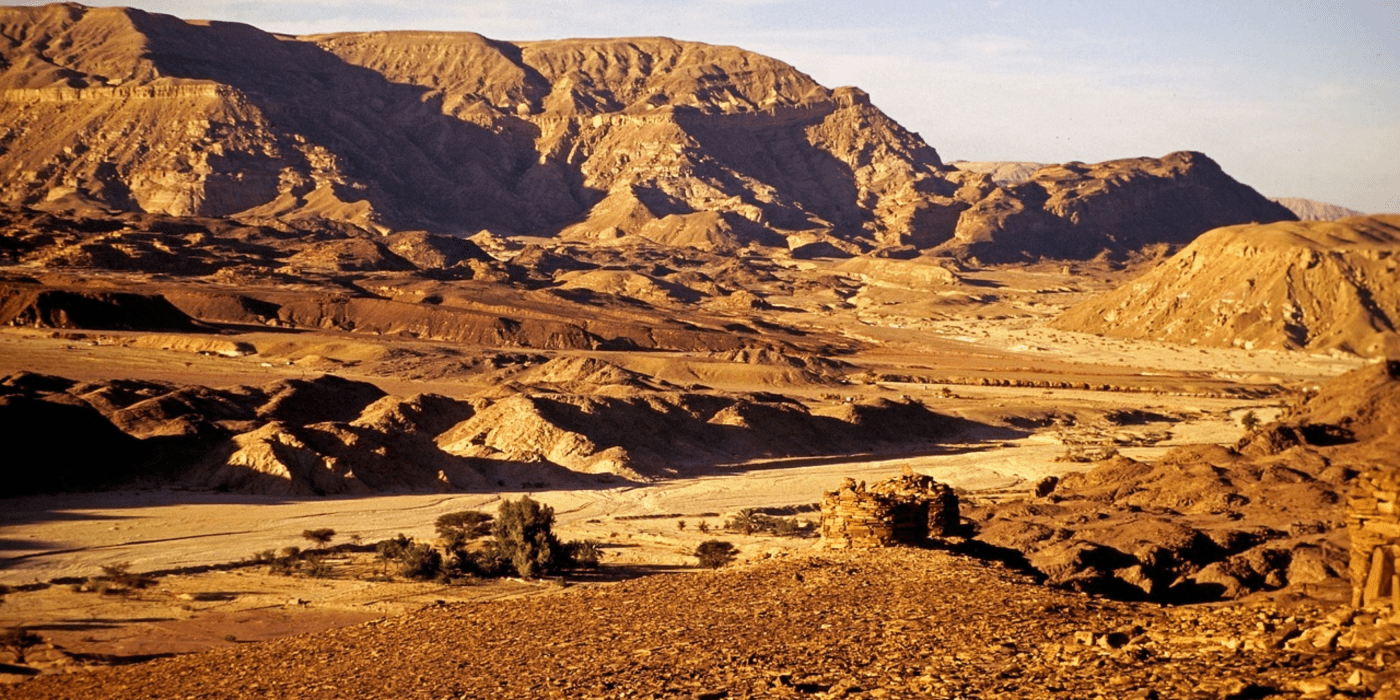
This week’s portion, along with the Book of Numbers in Hebrew, is called Bemidbar, meaning “in the wilderness.” MidBar has a root of dabar, meaning word. It’s in the wilderness that we hear the Word – that we hear God speak. We tend to think of the wilderness as a negative place, yet it is where we can most easily hear God. It is in the wilderness that Israel received instruction (revelation knowledge). It is in the wilderness that John the Baptist announced, “Behold the Lamb of God who takes away the sins of the world.” (Jn. 1:29, 36). And it is from the wilderness that Jesus emerged in the power of the Spirit (Lk. 4:14) and began His ministry of teaching, preaching, healing, and casting out demons.
You Matter to God
Num. 1:1-3 CSB
- God counts you as an individual, family, and part of your tribe.
- Jer. 1:4-10 CSB
- Eph. 2:10 CSB
- Wuest Translation: “For we are His handiwork created in Christ Jesus with a view to good works which God prepared beforehand in order that in their sphere we may order our behavior.”
- Our good works are the sphere that orders our behavior. Our knowing the Word- which is the plan of God, orders our behavior.
- Isa. 30:18-26 CSB
- The Book of the wilderness is the book of revelation. This is the Torah portion before Shavuot, Pentecost – The portion before the giving of the Torah, The Word of God. Everything in this portion shows us how to prepare to receive and how to discover our identity.
- Eph. 2:10 AMPC “For we are God’s [own] handiwork (His workmanship), recreated in Christ Jesus, [born anew] that we may do those good works which God predestined (planned beforehand) for us [taking paths which He prepared ahead of time], that we should walk in them [living the good life which He prearranged and made ready for us to live].”
- The promise is guaranteed, but there is work on our part. The book of Joshua is all about the war to take the land.
- We have to war for the promises of God.
- We have to trust to receive the promise.
- We have to be faithful and not do things our own way.
- Consequences can coexist within a promise.
Three Parts of Our Path
- We need to know the time (Num. 1:1 “The first day of the second month, in the second year.”).
- We need to know our place (Num. 1:3-46).
- We need to know who we are and what our call is (Num. 1:50-52).
Rashi states that the census is three evolutionary processes to revelation, and that’s what we see in the three points I just listed. Rashi gives us further insight: the love of God first awakens us, that love then begins to work influence in our lives, and that light eventually influences every aspect of our lives. (Rashi paraphrased and taken from Torah Studies by Rabbi Jonathan Sacks).
Jesus said, “Follow Me.”
- Our Purpose: “Follow Me, and I will make you fishers of people.” – Matt. 4:19 CSB
- Leave the past behind: “Follow Me and let the dead bury their dead.”- Matt. 8:22 CSB
- 2 Cor. 5:17 CSB
- Take up your cross (Matt. 16:24-26 CSB).
a. In Hebrew understanding, we have a good inclination and an evil inclination—this is a good lens through which to view Paul’s discussion in Romans 6-8.
b. Eph. 5:15-16 AMPC “Look carefully then how you walk! Live purposefully and worthily and accurately, not as the unwise and witless, but as wise (sensible, intelligent people), 16 Making the very most of the time [buying up each opportunity], because the days are evil.” [The literal translation in the CSB footnote is “buying back the time.].
c. 1 Jn. 2:15-17 CSB
d. Js. 3:13-18
A Hearing God Assignment
Following God includes both staying away from sin and walking righteously. Since this week’s portion and the book of Numbers are rooted in hearing the Word of God, I want you to hear the Lord for yourself as you look at 1 John and John 13-17 this week and revisit it over the next nine weeks as we go through Numbers.
Resources
Book: Torah Studies by Rabbi Jonathan Sacks
Commentary: Unrolling the Scroll by First Fruits of Zion
Article: The Wilderness and the Word by Rabbi Jonathan Sacks


 Casey D. Bell
Leave a comment